
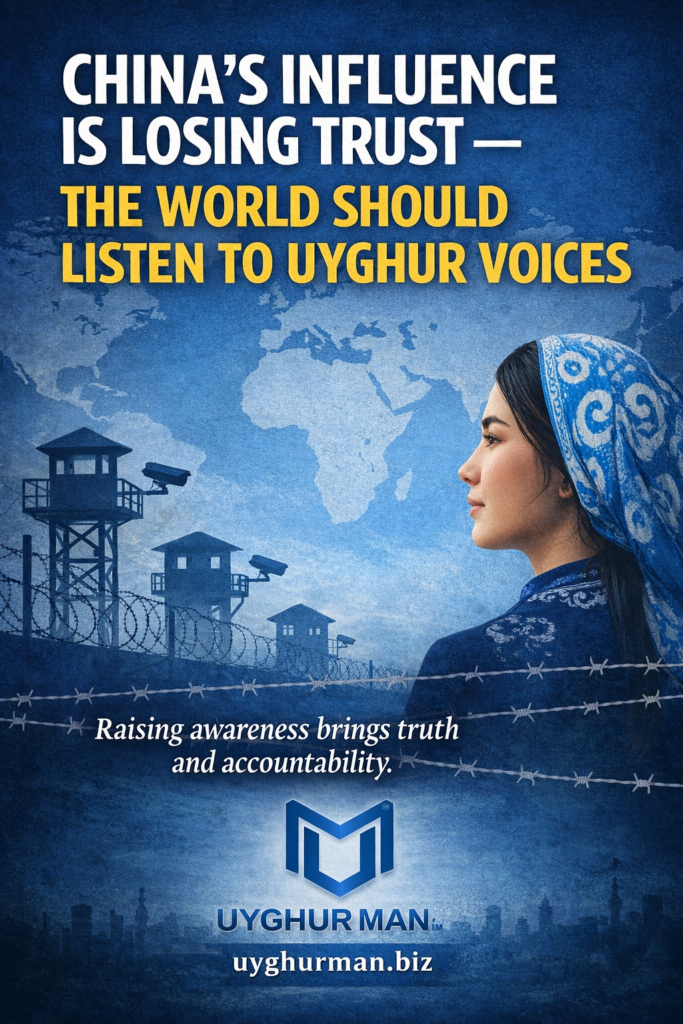
For many years, China has tried to present itself as a powerful and reliable global partner. Through economic influence, political pressure, and media messaging, the Chinese government has attempted to shape how the world sees its policies.
Countries, journalists, and human rights organizations are raising serious concerns about transparency, freedom, and trust. One of the most important issues at the center of this global conversation is the treatment of the Uyghur people.
For years, Uyghurs and their supporters have been speaking about what is happening in Xinjiang: restrictions on religious freedom, cultural erasure, mass surveillance, and the separation of families. Yet many of these voices were ignored or dismissed.
Today, that silence is changing.
Across the world, more governments, researchers, and citizens are beginning to ask difficult questions. Reports, testimonies, and investigations are bringing new attention to the reality faced by Uyghur communities.
Trust between nations is built on honesty and respect for human rights. When those values are questioned, the international community has a responsibility to listen carefully to those who have been speaking up the longest.
Uyghur voices deserve to be heard.
Raising awareness about Uyghur culture, history, and current challenges is not just about politics—it is about human dignity. When people understand the human stories behind global headlines, they can better recognize why these issues matter.
The world should listen more closely to Uyghur perspectives and ensure that these stories are not forgotten.
Only through awareness, dialogue, and accountability can the international community move toward a future built on trust and respect for all people.
Learn more and read my book about the Uyghur story: